The Manufacturability Gap

The science is ready.
The equipment isn't.

New therapies are failing in manufacturing — not in the lab. Fragile modalities. Viscous formulations. Unstable TMP. Scale-up failure. Alphinity designs the fluid handling systems that solve these problems at the source.

Alphinity TFFi single-use tangential flow filtration system

Enabling Abundance in Medicine™ — precision fluid handling for the therapies that matter most

See TFFi™ live at INTERPHEX NYC — Javits Convention Center, Booth 1361

APRIL 21–23, 2026

Book an Interphex demo Get discounted entry
Alphinity team at INTERPHEX

Process-First Engineering

Your process.
Our starting point.

Every piece of Alphinity equipment is designed around a specific process challenge. Four territories where conventional fluid handling consistently fails — and where our technology makes the difference.

01

Fragile Modalities

Viral vectors, cell therapies, exosomes, LNPs. Standard processing loses 20–40% of AAV titer to mechanical damage. Our single-use diaphragm pump eliminates the root cause — positive displacement with no product contact with moving parts.

02

Viscous Formulations

High-concentration mAbs, dense biologics, viscous buffers, and intensified processes. Conventional pumping technologies cannot maintain reliable flow above ~500 cP. Our diaphragm pump handles up to 3,000 cP with flow rate independent of viscosity and backpressure.

03

Process Control

Unstable transmembrane pressure leads to membrane fouling, inconsistent flux, and failed batches. Near-pulseless diaphragm pumping combined with our electric diaphragm valve delivers the precision-controlled flow that sensitive processes demand.

04

Scale-Up Failure

Processes that work at bench scale fail in manufacturing because the mechanical conditions change with scale. Alphinity's platform maintains identical flow behaviour from 30 mL screening to 10 L clinical batches — no process redesign.

The physics of the problem

Conventional equipment
damages product by design.

Standard bioprocess fluid handling was engineered for water, not biologics. The mechanical limitations of legacy pumping technologies — compression, cavitation, pulsation, particle shedding — are not design oversights. They are the unavoidable consequence of how these technologies function. Eliminating them requires a fundamentally different architecture.

Legacy Fluid Handling Conventional

  • Roller-based pumps compress tubing each revolution — cumulative shear damage with every pass
  • Rotary designs generate audible cavitation above threshold flow rates — indicating active product damage
  • Wetted surface wear sheds particles into the product stream over time
  • Flow collapses above ~500 cP — viscous formulations require process reformulation
  • Inherent pulsation destabilises transmembrane pressure — flux variability and fouling
  • Even-number diaphragm configurations create harmonic resonance — pulsation peaks amplify rather than cancel, increasing pressure variability
  • Different pump selection at bench, pilot, and clinical — process cannot transfer intact

PIXER® Diaphragm Pump Alphinity

  • Product never contacts moving parts — positive displacement, no compression
  • Single-use wetted path — no particle shedding, no carry-over risk
  • No cavitation — gravity-flooded suction, instant air-free priming
  • Handles up to 3,000 cP — flow rate independent of viscosity and backpressure
  • Near-pulseless — stable TMP, consistent flux, no fouling surprises
  • Same platform 30 mL → 10 L — no process redesign at scale
Process Challenge Conventional Equipment Alphinity Platform
Shear damage High — roller compression every revolution Ultra-low — no product contact with moving parts
AAV / LV titer loss 20–40% product lost to pump-induced damage 4.4× better filterability vs low-shear benchmarks
Viscous formulations Fails above ~500 cP; flow drops with viscosity Handles up to 3,000 cP; flow independent of viscosity
Pressure control Pneumatic valves require compressed air infrastructure 24V DC electric — ±0.3 PSI accuracy, no compressed air
Scale-up continuity Different equipment at each scale — process redesign required Same architecture from 30 mL screening to 10 L clinical
TMP stability One pressure spike per roller pass — membrane fouling Near-pulseless — stable TMP, consistent flux

Our solutions

Components and systems
designed around your process.

Each product solves a specific manufacturing problem. They work independently — and together as an integrated platform.

TFFi single-use tangential flow filtration system

Launching at Interphex 2026

TFFi™ — Single-Use TFF System

Tangential flow filtration for sensitive biologics. Ultra-low shear pumping. 30 mL to 10 L. Fully automated.

PIXER single-use positive displacement diaphragm pump
Flow: 0.73 mL – 240 L/min
Viscosity: up to 3,000 cP
Pressure: 6 bar

Pump Technology

PIXER® — Single-Use Diaphragm Pump

Positive displacement. Ultra-low shear, near-pulseless flow. Handles viscous fluids where peristaltic pumps fail.

VannX motorized single-use diaphragm valve
Accuracy: ±0.3 PSI
Actuation: 24V DC
No compressed air

Valve Technology

VannX™ — Motorized Diaphragm Valve

±0.3 PSI precision, continuously adjustable via microstepping. 24V DC electric — no compressed air required.

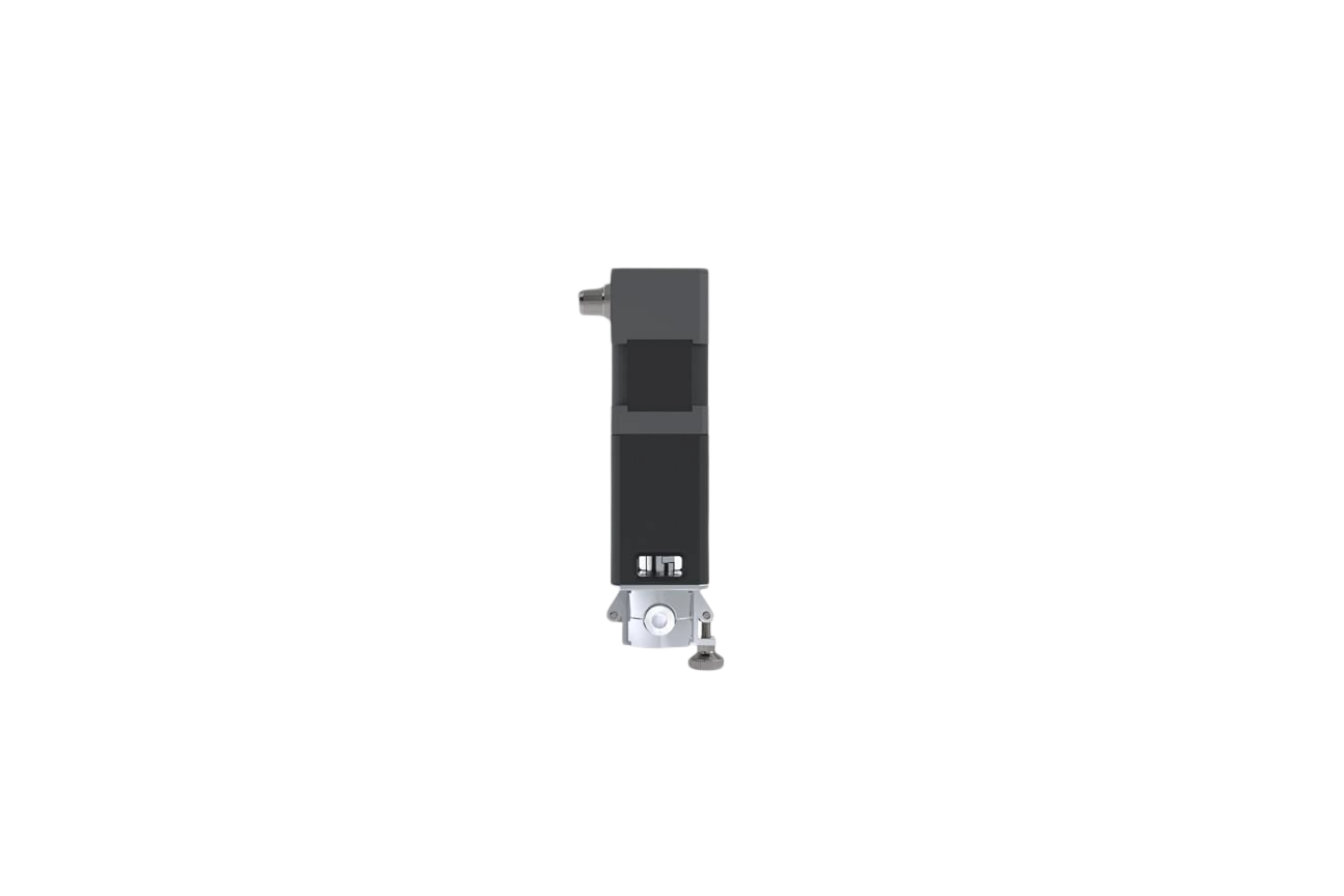
ARTēVA electric pinch valve
Motorized · Pneumatic · Manual
Clamp-on · No tools required

Pinch Valve Series

ARTēVA® — Pinch Valve Range

Motorized, pneumatic, and manual pinch valves. Clamp-on design, visible position indicator, compatible with all standard single-use tubing.

Page coming soon

SoloCheck single-use check valve range
Multiple configurations
Single-use wetted path
Process safeguard

Process Safety

SoloCheck™ — Single-Use Check Valve

Prevents backflow and protects process integrity. Available in multiple port configurations for inline integration across tubing sizes.

Page coming soon

Process Expertise

We know why
processes fail.

Most bioprocess problems are blamed on chemistry — buffer formulation, cell line, upstream conditions. In our experience, the failure is often mechanical. The physics of how fluid is moved matters as much as what's in it.

Understanding the failure modes is how we design equipment that doesn't cause them.

Explore our thinking on flow control

Why do legacy pumps damage biologics?

Most bioprocess pumping technology was engineered for water and chemical transfer — not sensitive biologics. The mechanical principles that make them work (compression, rotor contact, pulsation) are fundamentally incompatible with fragile proteins and viral particles. The damage is cumulative, often invisible, and inherent to the design — not a flaw that can be tuned away.

What is cavitation — and why does it matter?

When a pump creates negative pressure at its inlet, dissolved gases form bubbles that collapse violently — generating forces that destroy proteins and viral particles at the molecular level.

Why does my process fail at scale?

Because the mechanical conditions change. Different pump, different flow profile, different pressure dynamics. Physical process continuity matters as much as the recipe.

Bespoke Systems

Built around your process.
Not the other way around.

Standard systems force your process to adapt to the equipment. We start with your process constraints — flow behaviour, pressure sensitivity, viscosity, scale — and engineer a system that fits. PIXER® pumps, VannX™ valves, and ConSynSys™ automation as building blocks.

Learn about bespoke systems
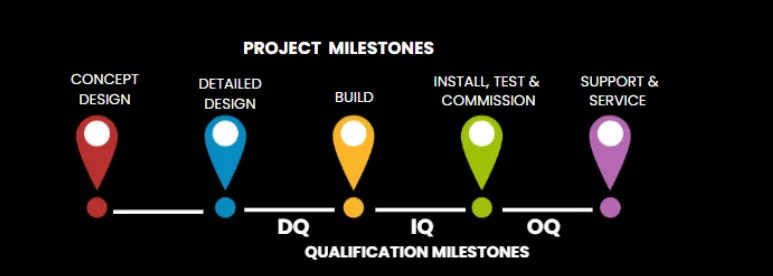
Project milestones and qualification milestones — Concept Design, Detailed Design, Build, Install Test & Commission, Support & Service

Built to the standards that matter

USP Class VI
All wetted materials
Gamma-Validated
Single-use flowpaths
21 CFR Part 11 Architecture
Audit trail & electronic signatures
GMP-Compatible by Design
Qualify when you're ready
ALCOA+ Data Integrity
Attributable, contemporaneous, accurate

In the industry

Where you'll find us.

Alphinity is active across the global bioprocessing community — at the conferences where the industry's process challenges are discussed and solved.

Single Use Event Leiden 2026

September 15, 2026 · Leiden, Netherlands

Single Use Event — Leiden

Corpus Congress Centre, Leiden.

ISPE Boston Area Chapter Product Show 2026

October 7, 2026 · Foxborough, MA

ISPE Boston — Product Show

Gillette Stadium, Foxborough.

Get Started

Ready to solve your
manufacturing challenge?

Start with a datasheet, or talk directly to our process engineers. We'll help you find the right approach for your application.

Request a datasheet Speak to an engineer

Ready to talk?

Request a datasheet Speak to an engineer