Pump Technology

Flow behavior
is the process.

Most pumps transfer fluid. PIXER® controls it. The flow profile your pump creates determines shear exposure, pressure stability, mixing quality, and whether your scale-up succeeds or fails. PIXER® engineers predictable behavior at source — so you stop compensating downstream.

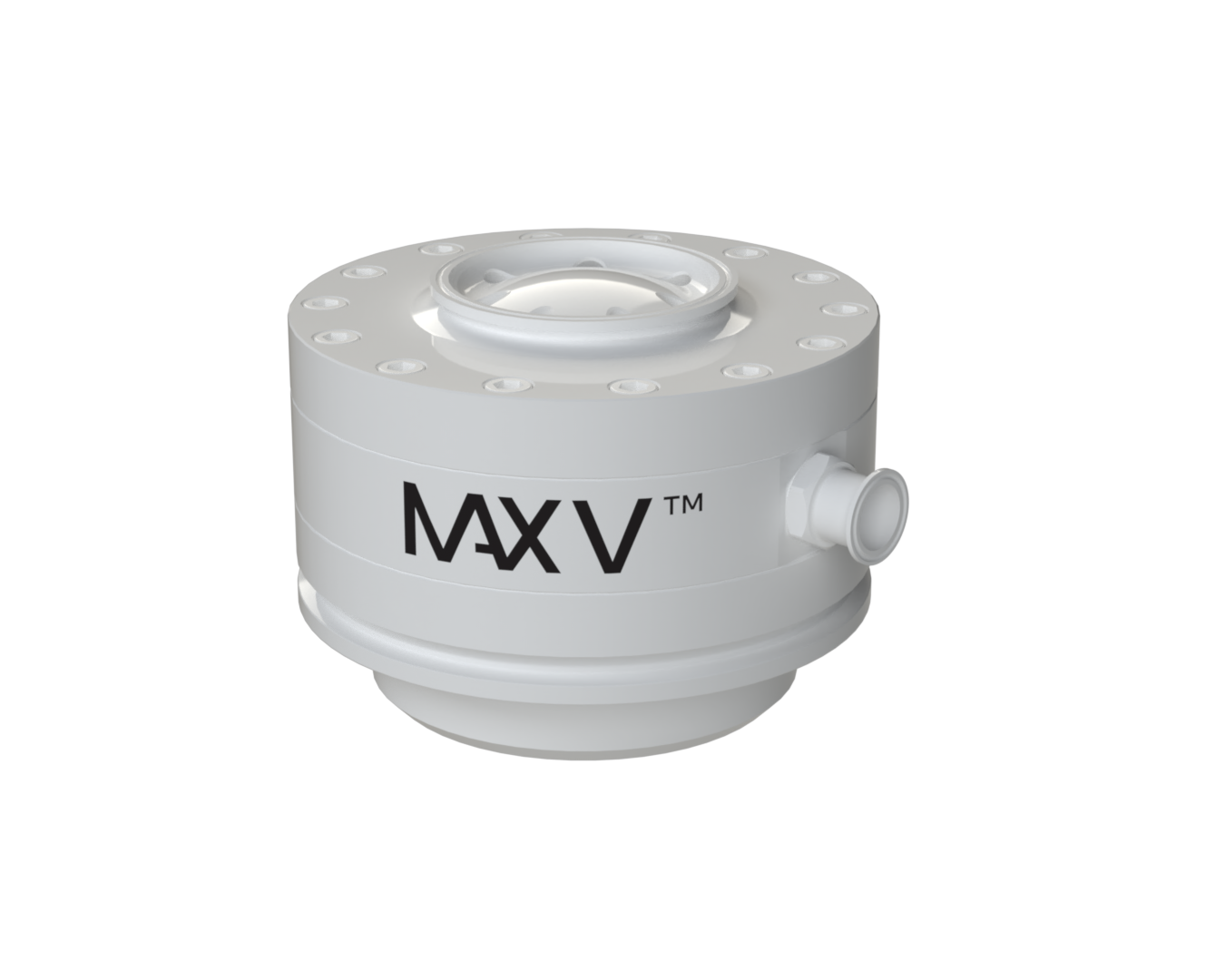
PIXER® P10 single-use positive displacement diaphragm pump

What is PIXER®?

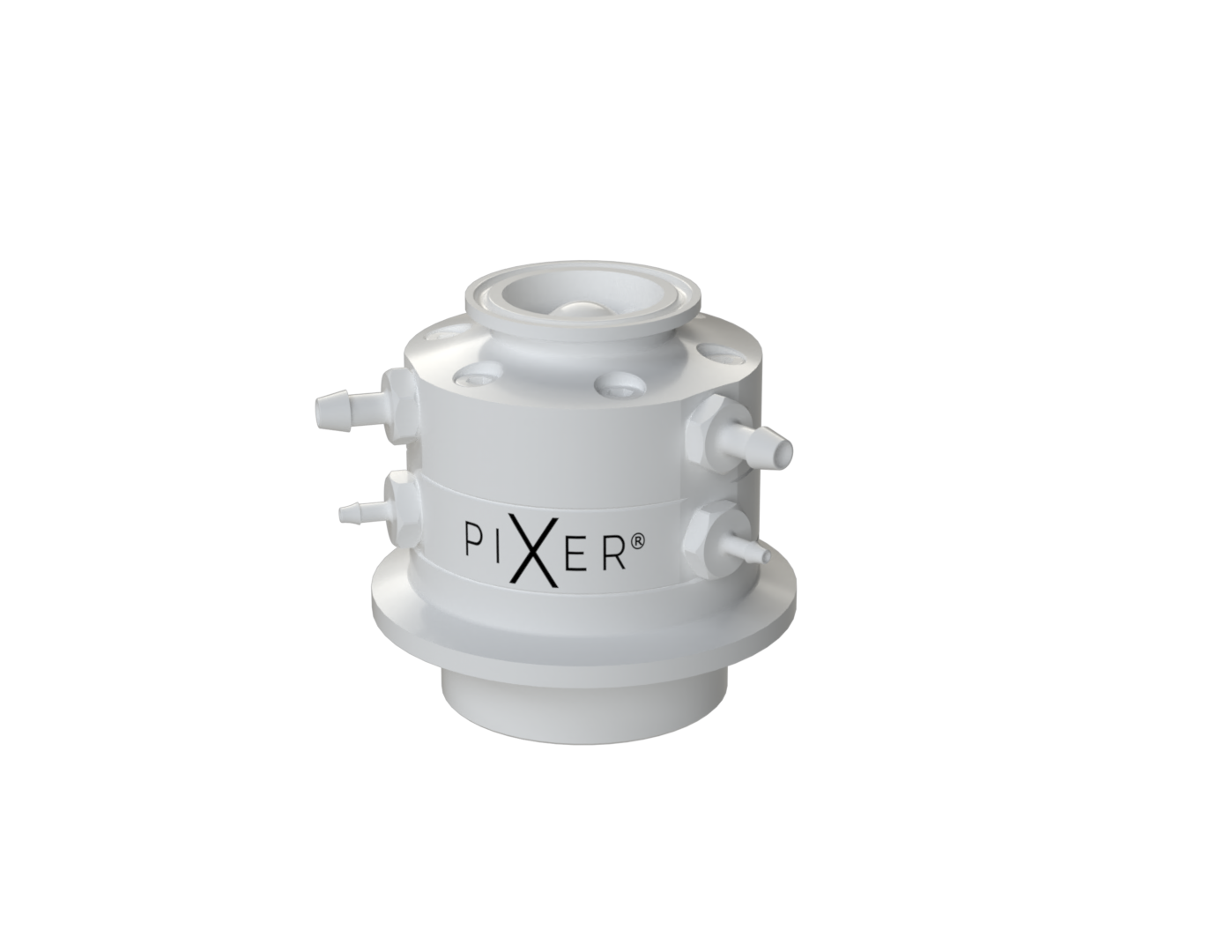
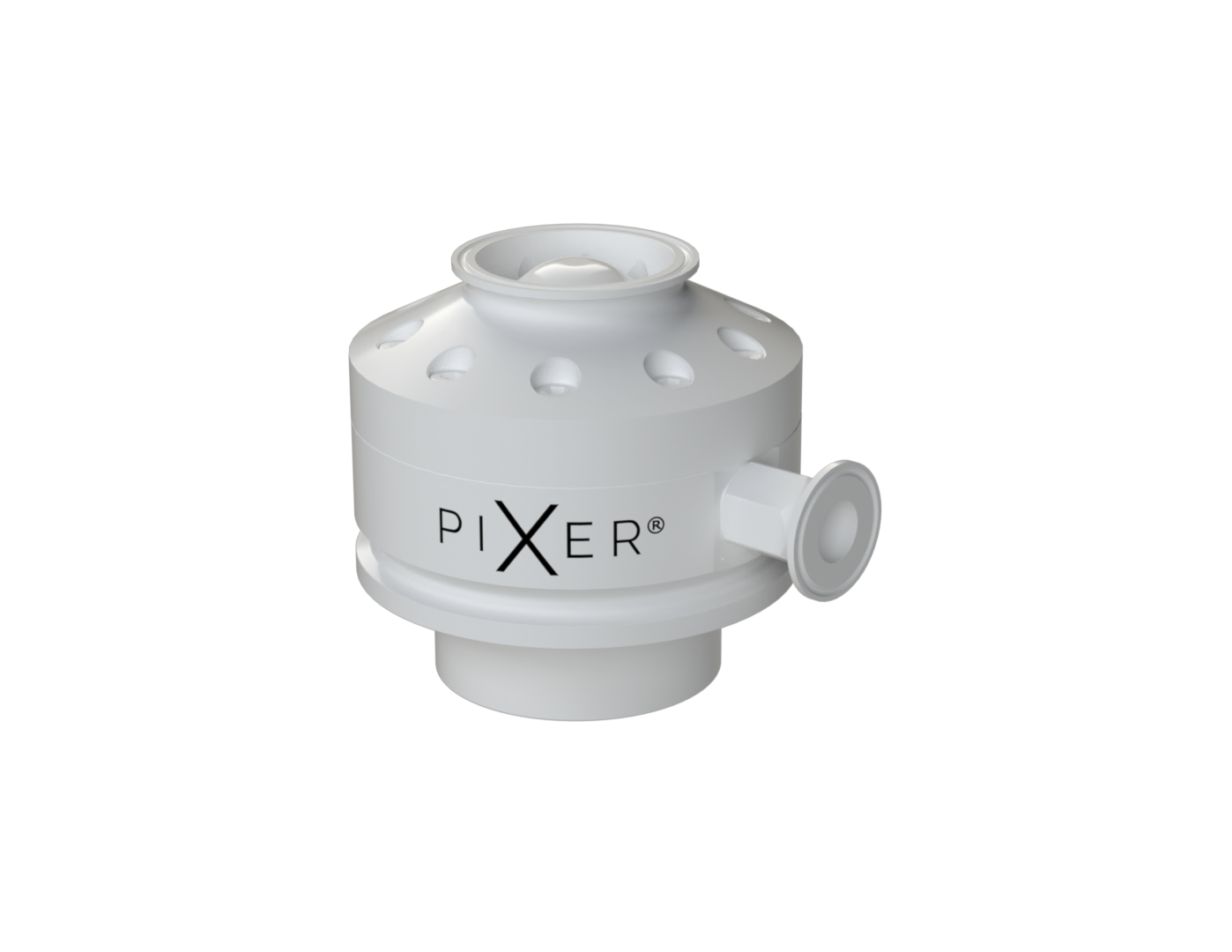
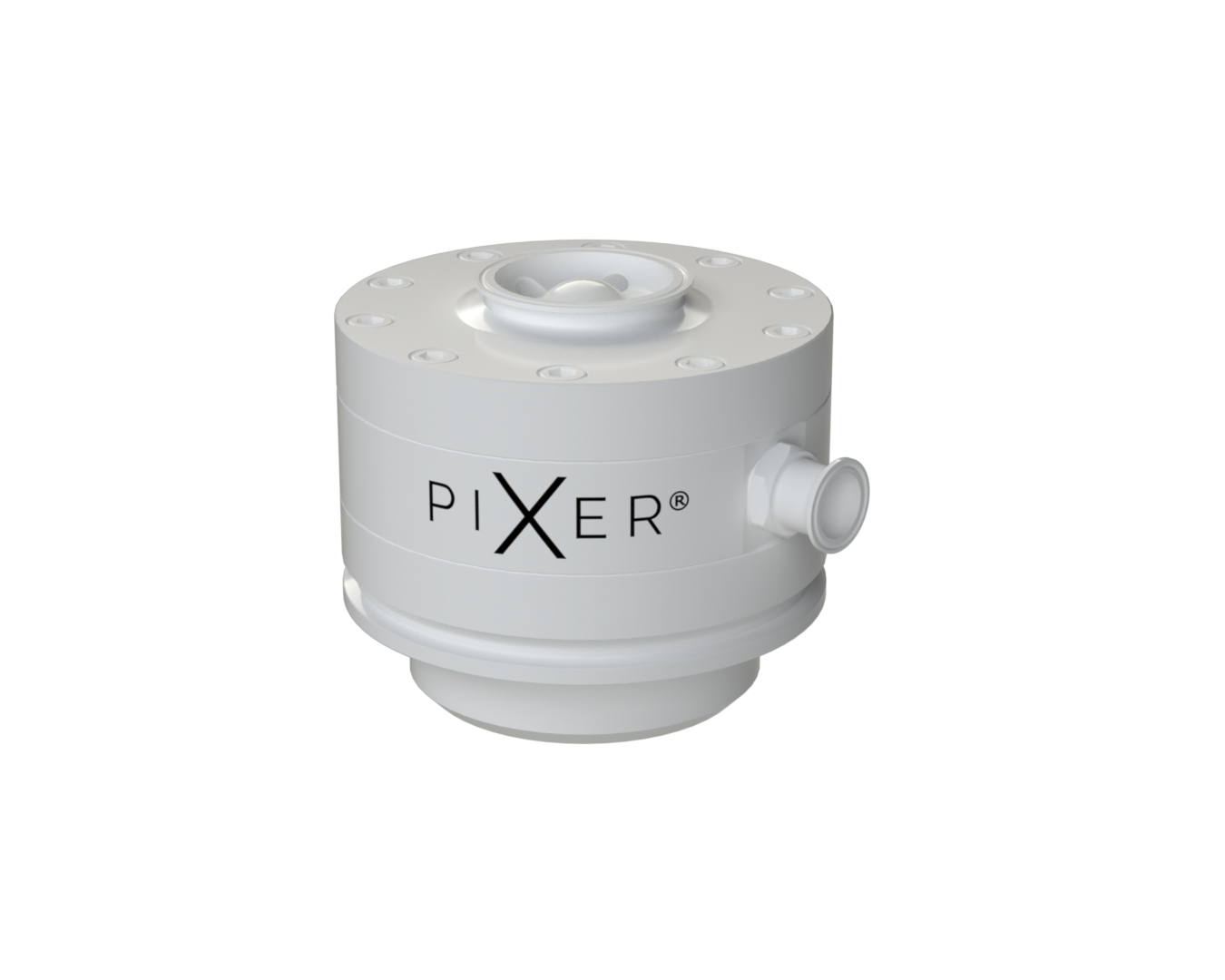
PIXER® is Alphinity's single-use positive displacement diaphragm pump for bioprocessing. It uses a radial diaphragm design (3, 5, or 7 diaphragms depending on model) with vertical orientation to deliver ultra-low shear, very low pulsation flow — protecting sensitive biologics that conventional peristaltic pumps damage. Five models span from 0.73 mL/min to 240 L/min. The pump head is single-use and disposable; the drive unit is reusable.

3,000 cP
Maximum fluid viscosity — where peristaltic pumps fail
3 / 5 / 7
Diaphragms in radial layout — scaled to flow requirement
240 L/min
Maximum flow rate (P40) — 0.73 mL/min to 240 L/min across the platform
67%
Greater flow rates vs 4-diaphragm competitors at equivalent speed

The case for behavior-first design

Your pump isn't passive.
It shapes every parameter downstream.

Every time fluid moves through a bioprocess, the pump determines the outcome. Pressure spikes destroy cells. Flow instability destabilises TFF. Pulsation corrupts in-line sensors. Viscosity resistance causes cavitation. These are not downstream problems — they originate at the pump. Legacy fluid handling was designed for industrial transfer, not biological processes. PIXER® was engineered from the physics up to control flow behavior — not just move volume.

01

Pressure spikes kill cells

Each roller revolution in a peristaltic pump creates a pressure transient. In viral vector and CGT manufacturing, those transients translate directly to cell stress and yield loss. PIXER®'s five overlapping diaphragm strokes eliminate the spike at source.

02

Pulsation corrupts measurement

Pressure sensors, flow meters, and in-line analytics rely on stable signals. Pulsatile flow introduces noise that masks real process variation and makes closed-loop control unreliable. Near-pulseless flow means your instruments measure the process, not the pump.

03

Viscosity isn't the problem — the pump is

Peristaltic and centrifugal pumps lose output as viscosity rises. Operators compensate with higher speeds, which increases shear, heat, and tubing wear. PIXER®'s positive displacement design is viscosity-independent — 200 cP behaves like water, and 3,000 cP does too.

04

Scale-up fails when behavior doesn't transfer

If your pump at lab scale and your pump at production scale produce different flow profiles, your process doesn't transfer — it has to be re-developed. PIXER®'s platform architecture delivers the same radial diaphragm behavior from P0 to P40. What you develop at bench is what you manufacture at scale.

05

Engineers variability out — not downstream

The conventional approach is to add downstream compensation: dampeners, pressure regulators, inline mixers, additional sensors. PIXER® makes these unnecessary by eliminating the variability at source. Fewer components means simpler validation, lower hold-up volume, and fewer failure modes.

06

Automation requires stable inputs

Closed-loop control algorithms depend on consistent, predictable process signals. A pump that creates noise cannot be reliably automated. PIXER®'s stable flow profiles are a prerequisite for Pharma 4.0 automation — not an optional feature.
How the PIXER® pump works

Odd diaphragms. Smoother flow.

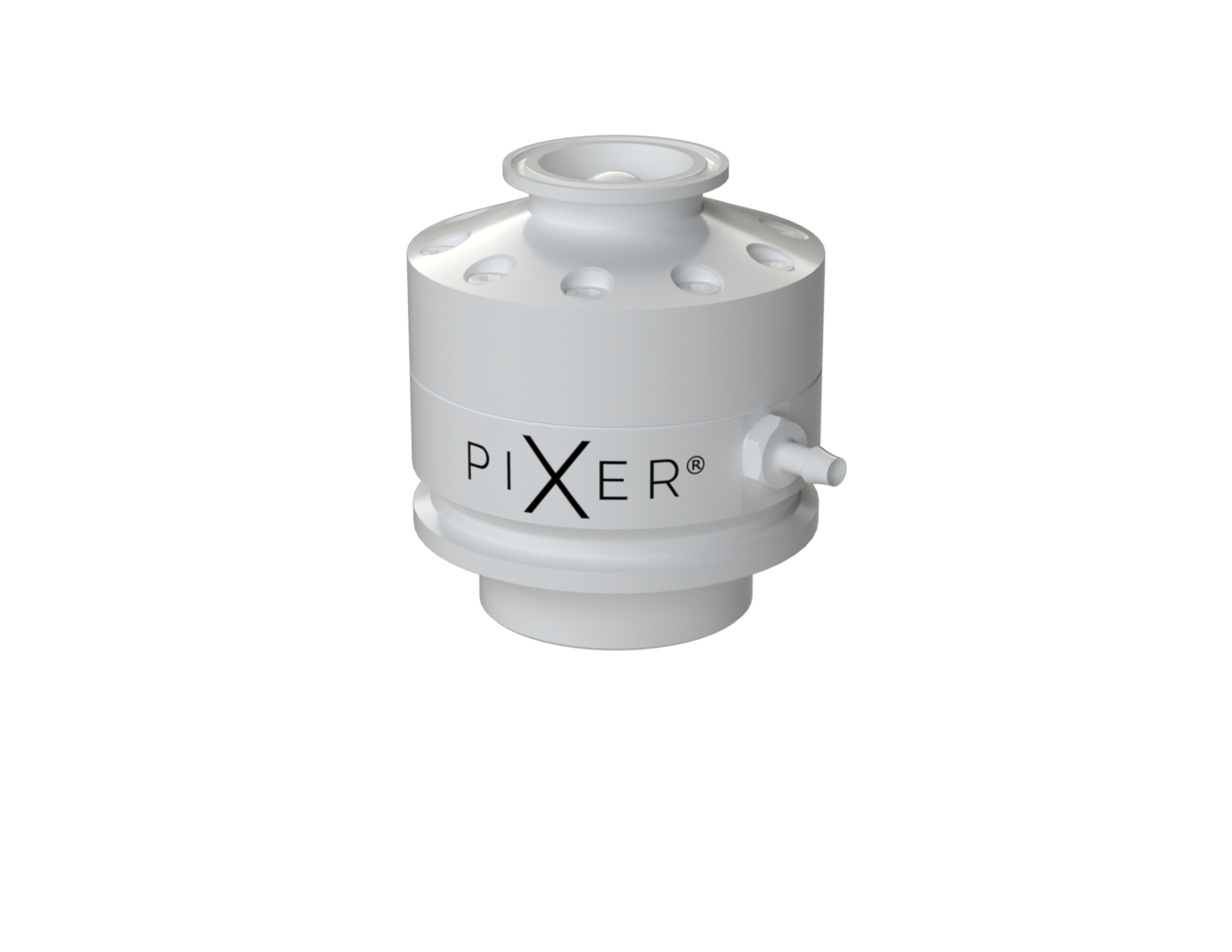
PIXER® uses odd numbers of diaphragms — 3, 5, or 7 depending on model — arranged in a tight radial pattern with vertical orientation. Product enters through a large-bore top inlet for gravity-flooded suction, instant air-free priming, and zero cavitation risk.

Why odd numbers? In a multi-diaphragm pump, each diaphragm operates at a phase offset of 360°/N. With even numbers (e.g., 4 diaphragms at 90°), opposing pairs create symmetric harmonic reinforcement — residual pulsation peaks that no amount of tuning can eliminate. Odd-numbered arrangements break this symmetry: no two diaphragms are ever in direct opposition, so even-order harmonics cancel naturally and discharge overlap is distributed more uniformly across the full rotation. The result is measurably smoother flow at every operating point — verified in independent testing showing 5-diaphragm PIXER® pumps outperforming 4-diaphragm competitors on pressure stability, flow rates, and speed efficiency.

Ultra-low shear

Product never contacts moving parts. No compression, no stretching, no tubing fatigue. The gentlest pump technology available for bioprocessing.

Very low pulsation

Five overlapping diaphragm strokes produce near-continuous flow. Stable pressure profiles for TFF, chromatography, and filtration operations.

Backpressure independent

Positive displacement means flow rate doesn't change with system backpressure. Accurate, repeatable delivery regardless of downstream conditions.

Viscous fluid handling

Up to 3,000 cP natively. High-concentration mAbs, dense formulations, and viscous buffers — no output loss, no cavitation, no workarounds.

Built-in check valve

The pump's one-way flow design eliminates backflow. No separate check valves required — simplifies flowpath and reduces hold-up volume.

Gravity-flooded inlet

Vertical orientation with large-bore top inlet means instant priming. No negative pressure at the suction side — eliminates inlet cavitation entirely.

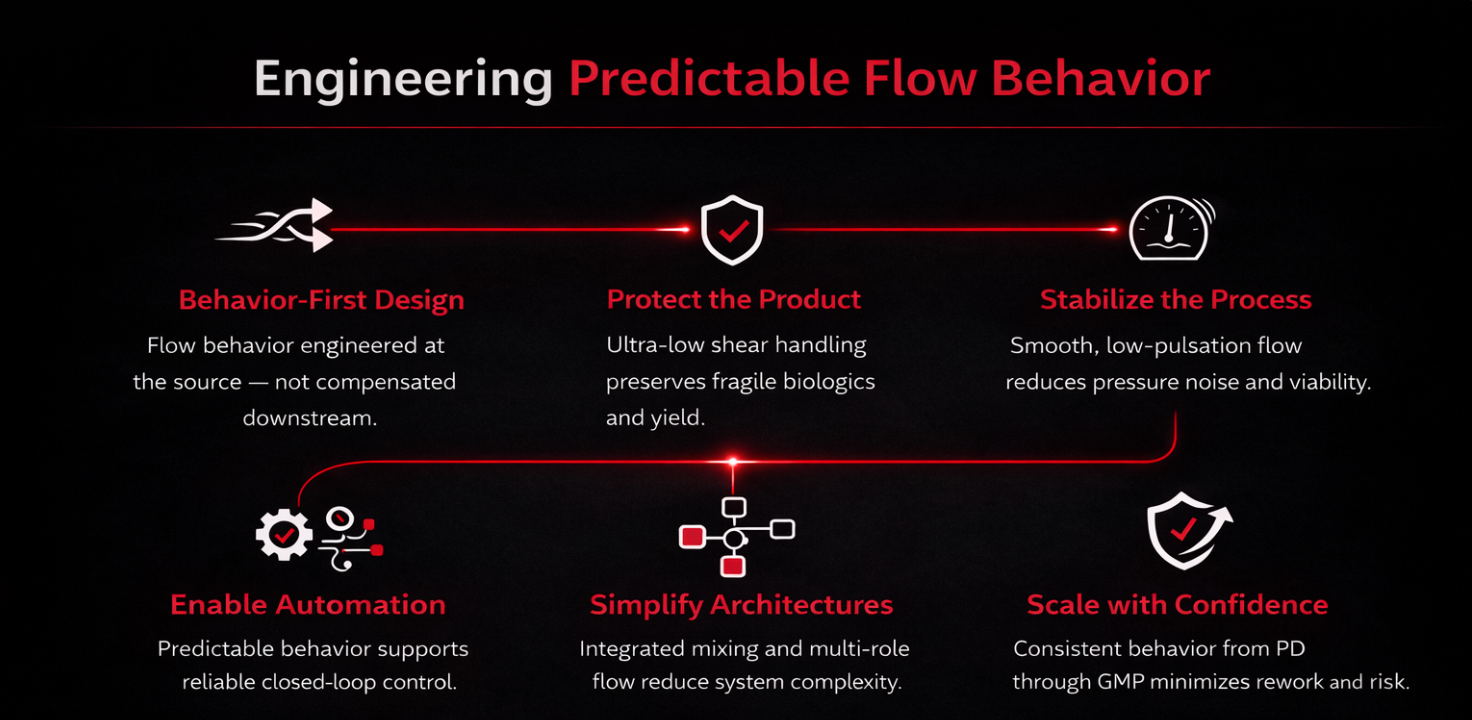
Engineering Predictable Flow Behavior — Behaviour-First Design, Protect the Product, Stabilize the Process, Enable Automation, Simplify Architectures, Scale with Confidence

Internal Mixing

Mix inside the pump.
Fully mixed at the outlet.

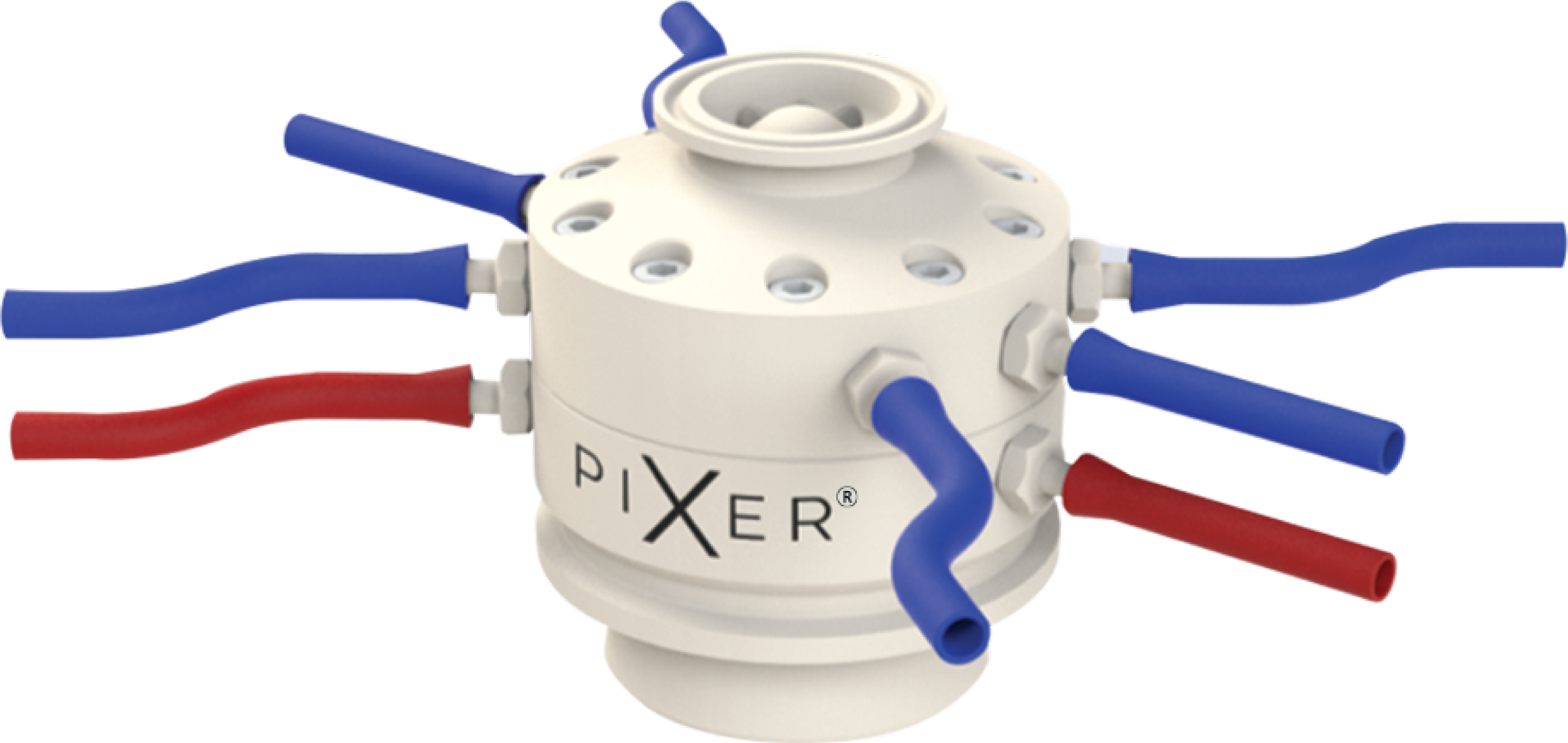
Every PIXER® pump supports injection ports — secondary inlets where fluid is positively pumped into the pump body during operation. The result: complete internal mixing within the pump itself. Any fluid mixed internally can be considered fully mixed at the outlet.

Injection ports, not inlets

Injection ports require fluid to be positively pumped in — they are not gravity-fed inlets. This gives precise control over what enters the pump and when.

1–99% mix ratios

Achievable across 1–99% of the pump's pressure and flow range. From trace additions to near-equal blends — controlled by injection flow rate relative to main flow.

Stacked architecture

Injection ports sit in the top slice, outlets in the bottom slice — both can be populated simultaneously to their maximum count. Internal check valves prevent cross-contamination between the main inlet, injection ports, and outlets.

Inline buffer dilution, pH adjustment, additive dosing — all achievable within the pump body itself. No external static mixers, no additional hold-up volume, no extra connections. Internal check valves isolate each injection port from every other port and the main inlet, preventing any cross-contamination. One component does the pumping and the mixing — safely.

ModelMax Injection PortsMax OutletsMix Ratio Range
P0 / P0 Fast Prime331–99%
P101051–99%
P20 / P20 Fast Prime1051–99%
P30551–99%
P40771–99%

Viscous fluids.
Our territory.

At high viscosity, peristaltic pumps lose output, generate excessive heat, and accelerate tubing failure. Centrifugal pumps lose head entirely. PIXER®'s positive displacement architecture is viscosity-independent — 3,000 cP runs the same as water.

High-concentration mAb formulations routinely exceed 50 cP and can reach 200+ cP. PIXER® handles these natively, with headroom to spare for the most demanding viscous applications in bioprocessing.

PIXER® single-use diaphragm pump render

Pump Family

One platform. Every scale.

The PIXER® platform spans from bench-scale process development to production. Seven models from 0.73 mL/min to 240 L/min — same radial diaphragm architecture, same flow behaviour, consistent results regardless of scale.

PIXER® P0 pump head

P0

3 diaphragms

Up to 1.1 L/min

PIXER® P10 pump head

P10

5 diaphragms

Up to 5.1 L/min

PIXER® P20 pump head

P20

5 diaphragms

Up to 40 L/min

PIXER® P30 pump head

P30

5 diaphragms

Up to 175 L/min

PIXER® P40 pump head

P40

7 diaphragms

Up to 240 L/min

Click any pump model below to highlight its specifications.

Specification P0 Fast Prime P0 P10 P20 Fast Prime P20 P30 P40
Diaphragms3355557
Tubing ID1/8"1/8"1/8", 1/4"1/2", 3/4"1/2", 3/4"3/4", 1"1", 1.5"
Displacement0.73 mL/rev0.73 mL/rev1.7 mL/rev16.7 mL/rev16.7 mL/rev135 mL/rev185 mL/rev
RPM range1–1,0001–1,5001–3,0001–1,8001–2,4001–1,3001–1,300
Flow (min @ 1 RPM)0.73 mL/min0.73 mL/min1.7 mL/min16.7 mL/min16.7 mL/min135 mL/min185 mL/min
Flow (max)0.73 L/min1.10 L/min5.10 L/min30.1 L/min40.1 L/min175.5 L/min240.5 L/min
Internal volume14 mL22 mL45 mL~190 mL300 mL1,300 mL2,150 mL
Main inlet3/4" TC1.5" TC1.5" TC1.5" TC3" TC4" TC6" TC
Max outlets3355557
Max injection ports3310101057
Weight0.3 kg0.3 kg0.44 kg2 kg2 kg8 kg12.8 kg
Operating pressure6 bar6 bar6 bar6 bar6 bar6 bar6 bar

Fast Prime variants — P0 Fast Prime (3/4" TC inlet, 14 mL internal volume) and P20 Fast Prime (1.5" TC inlet, 1,800 RPM max) are optimised for fast priming, low hold-up, and transfer pump applications. The P0 Fast Prime is used as the transfer pump (P01) in all TFFi™ configurations.

Five is smoother than four. Independent testing shows the PIXER® 5-diaphragm pump delivers 67% greater flow rates and achieves target flow at 50% lower motor speed compared to competing 4-diaphragm designs — with significantly lower pressure pulsation at every operating point.

Need specs for your application?

Request the PIXER® datasheet Talk to an engineer

Materials & Compliance

Designed for regulated environments

ParameterSpecification
Pump body materialPolypropylene
Diaphragm materialTPV (thermoplastic vulcanizate)
BiocompatibilityUSP Class VI
BSE/TSEFree
ManufacturingISO Class 7 cleanroom
SterilizationGamma irradiation compatible
RegulatoryFDA-compliant wetted materials

Single-use by design

The pump body and diaphragms are single-use, disposable wetted components. The drive unit is reusable and designed for tool-free pump head changeover.

Process development ready

GMP-compatible by design. All materials and manufacturing processes support customer validation for GMP environments. Start developing today — validate when you're ready.

Applications

Built for the processes others can't support

Cell and gene therapy (CGT)
mRNA and LNP processing
Viral vector manufacturing (AAV, Lenti)
Vaccine production
High-concentration mAb formulation
Continuous and hybrid manufacturing
Exosomes and extracellular vesicles
Viscous buffer preparation

Who PIXER® is designed for

Built for process scientists
who don't accept the workaround.

PIXER® is for engineers and scientists who understand that fluid handling quality is a process variable — and who want to control it, not tolerate it.

CGT

Cell & gene therapy

AAV, lentiviral, and cell therapy products are damaged by shear and pressure events. If you're losing titre or viability during transfer, your pump is a likely cause. PIXER® removes it from the equation.

mRNA / LNP

mRNA and LNP formulation

Lipid nanoparticles are sensitive to mixing dynamics and shear history. PIXER®'s internal mixing architecture and low-shear flow profile give you control over what the particle experiences from the moment it forms.

mAb

High-concentration biologics

High-conc mAb formulations exceed 50–200 cP. Peristaltic pumps can't transfer them reliably without output loss and excessive back-pressure. PIXER® handles 3,000 cP without cavitation or compensation.

TFF

TFF and filtration

Stable transmembrane pressure requires stable flow. Pulsatile flow causes TMP oscillation that is misread as process variation. PIXER®'s near-pulseless delivery gives your TFF system the stable inputs it needs to perform correctly.

SCALE-UP

Process development and scale-up

If you're developing at bench scale and planning to transfer to GMP manufacturing, the platform architecture matters from day one. PIXER® scales without redesign — same behavior, P0 to P40.

AUTOMATION

Automated and continuous manufacturing

Closed-loop control requires reliable process signals. If you're building towards Pharma 4.0 or continuous biomanufacturing, PIXER®'s stable flow behavior and ConSynSys™ integration give you the control layer your automation needs.

FAQ

Common questions

How does PIXER® compare to peristaltic pumps?

Peristaltic pumps compress tubing with each roller revolution, creating pressure spikes, shear damage, and cavitation. PIXER® eliminates all of these — no tubing, no compression, near-pulseless flow. Product never contacts moving parts.

Can PIXER® handle viscous fluids?

Yes — up to 3,000 cP. As a positive displacement pump, PIXER® flow rate is independent of viscosity and backpressure. High-concentration mAbs, dense formulations, and viscous buffers run without output loss or cavitation.

What is the flow range of PIXER® pumps?

Seven models: P0 Fast Prime (up to 0.73 L/min), P0 (up to 1.1 L/min), P10 (up to 5.1 L/min), P20 Fast Prime (up to 30 L/min), P20 (up to 40 L/min), P30 (up to 175 L/min), and P40 (up to 240 L/min). The platform spans from 0.73 mL/min to 240 L/min.

Is PIXER® single-use?

The pump body and diaphragms are single-use, disposable wetted components manufactured from USP Class VI materials in ISO Class 7 cleanrooms. The drive unit is reusable.

What systems use PIXER®?

The PIXER® pump is the core of Alphinity's TFFi™ tangential flow filtration system, and is available as a standalone component for integration into bespoke systems. It integrates with ConSynSys™ automation for closed-loop control.

From pump to platform

The pump that becomes
your process control layer.

PIXER® is the core actuation component in Alphinity's integrated bioprocessing platform. Standalone, it replaces a legacy pump. Integrated with VannX™ valves and ConSynSys™ automation, it becomes a closed-loop process control element — with real-time flow monitoring, automated deviation response, and full 21 CFR Part 11 audit trails.

PIXER® + VannX™

Combine precise positive-displacement flow control with electric pinch valve routing. Configurable multi-outlet flowpaths with no manual intervention — fully automatable switching between process steps.

PIXER® + ConSynSys™

ConSynSys™ automation software turns PIXER®'s stable flow output into closed-loop process control. Flow setpoints, pressure feedback, deviation alarms, and electronic batch records — all integrated from the pump upward.

PIXER® in TFFi™

The TFFi™ tangential flow filtration system is built around PIXER® pumps. P0 Fast Prime handles transfer, P10 drives the recirculation loop — both configured for the stable, low-shear flow that TFF operations demand.

Already running a bespoke process? PIXER® integrates into existing flowpaths via standard tri-clamp fittings. No custom manifolds, no proprietary connectors. If you're replacing a peristaltic pump or retrofitting a legacy system, PIXER® fits where it needs to fit.

Get Started

Start with the right
flow behavior.

Tell us about your process — fluid type, flow range, scale, automation requirements. We'll specify the right PIXER® configuration and show you what controlled flow behavior looks like in your application.

Speak to an engineer Request the PIXER® datasheet

Ready to talk?

Speak to an engineer Request a datasheet